Showing posts with label social. Show all posts

Tuesday, 22 January 2013

Thinking Global, Acting Local

Nothing new there.


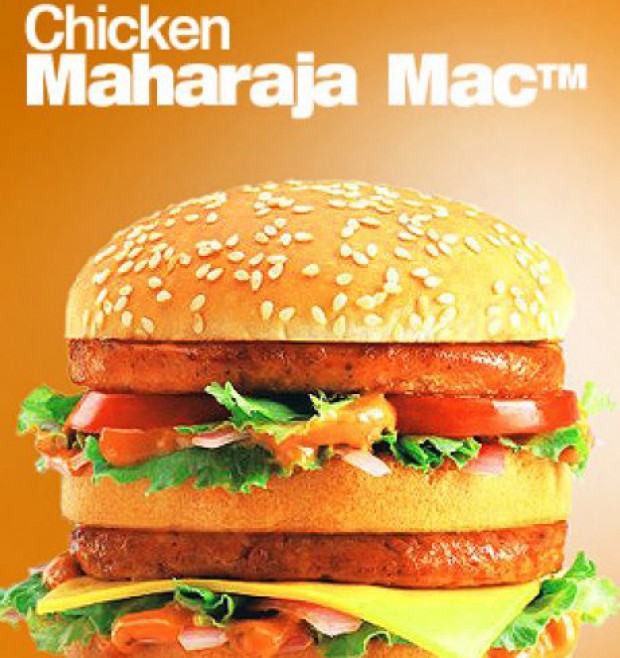
The term has been around for decades now. Whether it be the different blend of Coke in Mexico to the US; the way Nescafe instant coffee tastes different in France than the UK, the fact that The Big Mac is replaced with the Chicken Maharaja Mac in India

In fact, in 2012, MacDonalds announced(1) that with the fact that 40% of Indians being vegetarians, they would also be setting up vegetarian outlets there as well

Of course, this Thinking Global and Acting Local ( sometimes shortened to being Glocal), also applies to advertising


A Ford Focus is launched like this in the UK


But like this in Italy


A Starbucks looks different in York to one in Tokyo

   image

So why on earth do some global Brands think Social should be any different?

If you are one of those brands, then here are 9 reasons why you should focus your Facebook activity locally


(1) MacDonalds to beef up in India with meatless menu

Friday, 10 August 2012

Crowdsourcing for Money – A True Social Business Model

More often than not, brands thinking about Social Business  actually fail to go beyond the concept of Social Media. Even then, the more well-known platforms such as Facebook, Twitter, and Pinterest, etc.  actually only get used as an extension of a brand’s advertising department rather than with true social connotations.


Creating a Social Business involves 3 fundamentals:

  1. Being Social
  2. Using Technology to enhance being Social
  3. Building an economic model that derives value for both the brand and the customer on the foundation of technology and being Social
Being Social is not a new phenomenon. If you agree with me that being social actually only means reflecting and harnessing human behaviours and attributes, then we can go back thousands of years to see this. Aristotle espoused the virtues of Trust, Credibility and Logic when trying to win in the art of persuasion, these 3 traits being fundamental to being Social as well.
If we take word of mouth or story telling as Social activities then obviously these go back thousands of years – let’s not forget that for much of human history all we had was word of mouth and gestures. You could argue that the gestures of the Roman crowds in the Colosseum were an early form of crowd sourcing for decisions.  More recently, product recommendations or customer service examples used to be at the heart of every local grocer visit until the supermarkets began to take over.
Co-creation is nothing new either. Even my hometown brewery allowed its customers to help choose the name of its new premium beer back in 1952.
Obviously, what has changed fundamentally in Social is the impact of technology,  allowing us to be Social not only  locally, but globally and at the speed of light. And by technology, I guess fundamentally I mean the web, computing power, mobiles.
And of course, we are all in business to make money – honest – so the idea of applying an economic perspective to Social makes perfect sense.
“Peer production is about more than sitting down and having a nice conversation… It’s about harnessing a new mode of production to take innovation and wealth creation to new levels”.
Eric Schmidt, Executive Chairman, Google.
The idea of ensuring a positive return for both brand and consumer, again, is nothing new. It’s just simple business common sense.

One area of Social not always top of mind is Crowdsourcing

Defined ‘as a process that involves outsourcing tasks to a distributed group of people, this process can occur both online and offline, and the difference between Crowdsourcing and ordinary outsourcing is that a task or problem is outsourced to an undefined public rather than a specific body, such as paid employees’.
When we think Crowdsourcing, the favourite examples pop up such as mystarbucksidea, Wikipedia and so on. The industry website crowdsourcing .org  gives access to literally hundreds of Crowdsourcing initiatives. The different business models  tend to cluster around big buckets such as Crowd Labour, Creativity, Distributed Knowledge, Open Innovation, Tools and  Crowd Funding.
I’ve left Crowd Funding to last as there is one particular form of this I would like to spend some time on.  Crowd-funding tends to be associated with raising capital for businesses, film production and even rock groups ( eg ArtistShareRocketHub)and in fact can be defined as ‘Crowd funding (alternately crowd financing, equity Crowd-funding, or hyper funding) describes the collective cooperation, attention and trust by people who network and pool their money and other resources together, usually via the Internet, to support efforts initiated by other people or organizations.
Crowd funding occurs for any variety of purposes, from disaster relief to citizen journalism to artists seeking support from fans, to political campaigns, to funding a startup company, book (see Seth Godin’s case), movie or small business or creating free software’. Of course one of the more famous recent example of Crowd Funding was Barack Obama’s very successful campaign to raise funds for the assault on the American Presidency.


“Never lend money to friends or family,” the saying goes. But what about to complete strangers?

That’s the theory behind Peer to Peer ( P2P) Funding. In an age where there is a severe lack of trust in the traditional banking system and indeed, an even more severe lack of funds coming from Banks to the consumer ( because they don’t trust us to pay it back), this form of borrowing and lending money is gaining some attention.
Personal money lending is nothing new. Banking itself started off with merchants in the ancient world making grain loans to traders taking goods between cities. This dates back to 2000BC. Indeed there are references in the Bible ( Matthew 21:12) to money lenders in the Temple and of course in Shakespeare’s texts when he refers to Shylock in The Merchant of Venice.
It seems commonplace to talk about sharing our experiences ( Facebook, Twitter), our homes (AirBnB), our cars ( GetAround), our travel experiences (TripAdvisor). So why not our money? The idea of sharing our own money fits in with the previously mentioned tensions in the banking system, the slowing global economy and the rise and rise of social sharing.
P2P lending essentially works with lenders deciding how much they want to lend to certain types of borrowers at certain rates for fixed period of times, and borrowers try to tap into that pool of funds. Isn’t that what banks do?
Well yes and no. Yes but with the obvious hurdles of trying to run a business with overheads perhaps resulting in higher lending rates than might be expected. In fact, the rates agreed between these Social Lenders and Borrowers is as low as 6%, undercutting the majority of banks.
Let’s take an example that has been in the news recently in the UK, Zopa.
Zopa P2P lending
Zopa is a term apparently  taken from business theory. It stands for Zone of Possible Agreement and is the overlap between one person’s bottom line (the lowest they’re prepared to get for something) and another person’s top line (the most they’re prepared to give for something). If there’s no Zopa, there’s no deal. Sounds like an Economic Model to me. In fact, a seemingly attractive model as it is now close to having lent £250 million with the majority of that coming from Zopa in the UK. Except that its not lending between a Financial Institution, but between individuals.
Zopa, founded in 2005, has survived despite  other’s attempts to create a Social Business. In fact, Quackle, was an another  business that actually tried to base credit worthiness on social scores. Some P2P lending organisations actually rely on existing relationships between friends and relatives, acting just as the formal mechanism in between to organise amounts, rates, etc.

“Zopa offers  a smarter, fairer  way to do money  – and just the kind of refreshing alternative that the UK public deserves after years of ill-treatment by the banks. The ironic thing is that although Zopa is the first online lending and borrowing community, it is, in fact, no different to what’s  been happening in families  and communities for centuries all around the world. Zopa has simply successfully harnessed the power of those types of relationships” (James Alexander, COO at Zopa,  Press Release, 7 July 2006).

It differs from mainstream banking because the relationship is Horizontal, Peer to Peer, rather than Vertical, Institution to Individual

P2P Lending
 In Zopa’s case, around half a million peers now it  operates within the United Kingdom, Italy and a service is being developed for Japan.
It defines itself as a ‘person-to-person to person lending and borrowing community’. You could say it is almost trying to humanize money lending. It even tries to protect it’s lenders whose money is lent out in £10 packets, each to a different borrower, so anybody lending at least £500 has their money spread across 50 borrowers to achieve an ideal level of diversification and protection.
It looks after its own as a true community should.
But the Lenders collaborate not purely out of a sense of community, but also because they benefit from a better return than if they had their money tied up in low interest bearing savings with mainstream financial bodies.
Zopa - how lending works
This is the most obvious reward when we are being ‘Social’. Of course other benefits are often associated with social – recognition being an important one.
And remember Trust? Well, for two years running, Zopa was named the Most Trusted Loan Provider by Moneywise.
And that trust comes from being a very transparent about how it all works, no early redemption penalties, and an opportunity to talk with other members via discussion forums.

The Rise of the ‘Minipreneur’

But before we think this too is a modern phenomenon, let’s not forget that actually this was all the rage in Mesopotamia back in 1900BC when traders offered each other loans with maximum interest rates caps of 33% were put in place on grain loans, and 20% on silver.
The locally based ‘Friendly Societies’ that originated in Britain in the 17th century  had two main purposes – that of mutual  support and financial assistance.
Of course, these days we have the Internet,  almost instant access to credit ratings and technology that allows this type of Social Business to work, in reality.  At the CNet Technology Awards,  Zopa won the Technology Project of 2007 and Internet Innovation of 2006.
Social Lending thrives on the idea of individuals wanting to be small entrepreneurs, or minipreneurs as commented on by Trendwatching in 2006.
“At the core of all consumer trends is the new consumer, who creates his or her own  playground,  own  comfort zone, own universe. It’s the empowered  and  better informed and switched on consumer combined into something profound, something we’ve dubbed “Master of the Youniverse” – Trendwatching.com, 2006.
Key for me is the notion that we have always been Social. It’s just that technology is making it relevant again after it took the social out of business and tried to automate everything…including our customers.

( This was originally published on Fusion Marketing Experience ) 


Tuesday, 24 July 2012

Checking Up on How Big Companies Use Social

Largest Global Companies Mentioned More Than 10 Million Times Online in One Month


Other key findings from the Burson- Marsteller's Global Social Media Check Up include


  • Fortune Global 100 companies have more accounts on each platform than ever before with an average of: 10 Twitter accounts, 10 Facebook pages, 8 YouTube channels, 2 Google Plus pages and 2  Pinterest accounts.
  • 74% of companies studied have a Facebook page.
  • Forty-eight percent of companies are now on Google Plus.
  • Twenty-five percent of companies have Pinterest accounts.
  • Each corporate Facebook page has an average of 6,101 people talking about it

Read more in the presentation below


Burson-Marsteller Global Social Media Check-Up 2012 from Burson-Marsteller

You can find the full study at BM.com/social, including the executive summary and an infographic can be found below


Wednesday, 4 July 2012

Encouraging the Conversation


Clay Shirky suggests that in many cases, writing a review is more like writing fan mail (or hate mail) for a product, and the people who post them do not really expect it to be read.


So why do people write reviews.( As far back as 2010 24 percent of adults have posted reviews or comments online about things they buy (Hubspot, Online Product Research, September 2010) This infographic from Demandforce highlights some interesting reasons why they do.

Demandforce Infographic

But for whatever reason, it's always nice to be told that the content you've taken the time to produce actually gets read. So, it brought a smile to my face seeing this appear in my inbox this week from TripAdvisor


Trip Advisor Email

The pub I reviewed was as far as I was concerned pretty much out in the middle of nowhere so I was a little surprised to see 29 people reading my review.
Millennials infographic
Talking to Strangers

But people do, as the aptly named infographic from Bazaarvoice highlights, like 'Talking to Strangers'. This is particularly important of the Millenial Generation - that is , those born around the turn of the Century- who in a few years time will have the real buying power.

Over 84% claim that content from strangers has an influence on what they buy

Where my generation will listen to friends and family, my daughter's generation will listen to strangers ( so much for here listening to parental advice!)

So sites such as Trip Advisor need to keep that flow of new reviews coming in, and there is no better way (other than perhaps monetary rewards, which perhaps reduces the integrity of the review) than by keeping the reviewer informed of how their content is being used.

But first of all, you need to ask for those reviews.


Here is an example of a very simple approach from Laterooms.com

Laterooms Review Prompt

Key here is the ' 100% Genuine Reviews'.


This is important because not only do Millenials listen to strangers, but they don't trust what brands say, as backed up by the Nielsen Global Trust in Advertising Survey

Nielsen Trust in Advertising

Also, an interesting option from Homebase where they have actually compiled a list of my purchases over a period of time...


But of course the bonus of this conversation encouragement is that it actually prompts the consumer to re-visit your site increasing engagement and obviously offering the opportunity cross and up sell

UGC Process


Friday, 15 June 2012

Improving Data Capture with Social Sign-in


I was very pleased to be invited to the Silverpop Customer Summit, Amplify , this week in London


One of the topics raised was that 77% of people  said they would prefer Social Sign-in as opposed to other methods of registration. In fact that number is now as high as 85% in the UK according to research from Janrain

Other takes outs include that

  • 78% of consumers admit to having given incorrect profile info
  • 82% might leave a website if asked to register the traditional way
( Funnily enough Janrain doesn't offer Social Sign-in to register for the report)

This reminded me of the Google Checkout video that raised a few laughs last time I presented it at a conference last year

Enjoy!


Silverpop were actually the first in the industry to introduce this

Wednesday, 30 May 2012

Marketing Automation and Moments of Truth

If marketing has one goal, it’s to reach consumers at the moments that most influence their decisions

A quote taken from this McKinsey article.

But how often as marketers do we really understand when those moments of truth are?

DSC00302Of course as we buy our morning latte it would seem like almost the perfect opportunity to be offered a pastry with that in the local Costa or Starbucks. And it would seem that whatever you buying in WH Smith these days its always the right time to be offered a Cadbury's bar at a special price.( Although that would seem too random for my liking..and yet it seems to work)

And talking of chocolate, I came across this perfect photo opportunity in a Superdrug store recently where product placement was very much to the fore with a real moment of truth opportunity to cross sell

IMAG0373.jpg


Of course there are times when the customer is begging for you to make the sale - for example when I earlier this evening added the words 'Arne Jacobsen station desk clock ' into my Google search bar. No guessing what I was in the market for.


But sometimes it's not that obvious and you have to put the pieces together - as did Harry Caul in The Conversation ( An A to Z of eCRM - H is for Harry ).


Luckily these days much of this 'grunt' work is achieved with Marketing Automation platforms that can help score the right moment to approach a potential customer with the right message.


Seem a little old fashioned and sounds like old school marketing? I'm not so sure.


With so many marketing automation platforms these days incorporating Social as part of that lead process it makes it much more palatable to those of you who think Social is the answer, now what's the question?


Of course this only works if the programme has a real time element to it and doesn't work on traditional batch and blast mechanics.


But imagine a scenario where I read my emails in the morning with news of the new trainers I've been looking at online are available at my favourite Nike store. As I walk past the store, I receive a message on my location aware mobile  inviting me in to try them on for size - they have my size 9's in stock as they remember my last online order. And because they know how many miles I've run since then they think I deserve a new pair (using data to second guess that need)


I've got time so I go in and obviously check in - at which point I'm offered a free pair of socks to go with the trainers if I buy there and then.


Of course I buy, and receive a thank you message on my Nike App, encouraging me to take a photo of them on and share with my favourite community..Pinterest this week.


And so the journey continues.....not in my dreams but in real life


Anyway must quickly run down to WH Smith to buy some chocolate

Thursday, 17 May 2012

So You Want to do Social? Stick a Pin Anywhere.


Nobody said doing social was going to be easy - and judging by this landscape pulled together by Buddy Media it might not be.


buddy-media-social-marketing.jpg (584×431)


Wednesday, 16 May 2012

Social Drives Business Success

A recent Google MillwardBrown survey in Europe showed that 81% of high growth businesses are using social tools to drive growth

This is certainly an interesting correlation but of course it doesn't mean that we should dive head first into every social application available to us.


I heard an interview with Rick Wion. Director of Social Media at Macdonalds ( iStrategy San Francisco 2012)who was asked about how they evaluated what Social tools to use. He correctly pointed out that it wasn’t about choosing a technology that solved a business application but one that ’relevancy for our customers’ and so help MacDonalds reach their marketing goals.

Social is everywhere but it is not the same thing to everyone.

Social has become big at double speed because it gives people a way of doing what comes naturally to them, expressing themselves, whether that be the sharing of stories, complaining, giving advice or just generally hanging out for no real reason.

But you can’t crowbar Social into your Marketing Programmes. It’s either a natural fit or it isn’t. 

It doesn’t have to involve a ‘conversation’ between you and the consumer, but it could be a way of you giving the consumers an opportunity to talk with each other, or just allow people to win stuff!!

So for Social don’t just see Facebook and Twitter. Also see blogs, communities, forums, ratings and reviews and so on.

( original post here


And as is expressed in the report, let's not forget the importance that social tools can play inside a business as well.


The chart below from the report shows how social tools are used and their impact to connect people and share ideas


But the tools are seen as making real contributions to this as well as saving time, improving quality and cutting costs.

We all know that Social is here to stay, but it would seem that it's here to stay and improves the way we run our businesses as well.

Report can be downloaded here

Monday, 16 April 2012

eCRM Muppets

Assuming that the target market was milk purchasers with children in the family that love the Muppets then the latest packaging promotion / eCRM program by Arla for Cravendale milk certainly hit the mark with us.

The promotion that ties in with the recent Disney release of the Muppets Movie, encourages you to collect 20 unique codes and get an 'awesome' ( a little too American?) Kermit backpack as well as enjoying Muppet games and content at Cravendale's milkmatters website .

Of course the website they direct you to via the packaging is milkmatters.co.uk/muppets. But as the promotion has ended as I write this, there is a holding page with some contact details.

 One negative comment to make is that when I actually entered all my codes in ..yes 20..and we now have 12 litres of milk in the fridge!..the copy suggested that I could still collect and claim as long as I saw the special labels in store. Well this morning they were still visible in my local supermarket but the holding page suggests the promotion is over.

But I digress.

I am actually writing in praise of this program despite a few niggles ( although so far as I am yet to receive any follow up communications or indeed my Kermit backpack - do I really need to wait up to 28 days??) .

To start its a a simple mechanic, and I'll assume that the number of codes I need to collect is not just a random number but some how ties in with the business/marketing objectives for the programme - is Cravendale trying  to increase usage?..gain new customers?..increase web traffic?..boost Facebook likes?..

Even if you don't go straight to the muppets page, milkmatters.co.uk offers an option as to whether you want to go to the main website or the promotion ( compare with comparethemarket vs comparethemeerkat) .


Voucher entry is relatively simple ( as long as you can read the code printed on the inside of the label)and in fact you are given a bonus code if you share the promotion on your Facebook page..nice little exchange going on there


As your code is validated,  a new character enters the gallery and after every 5 codes, you unlock a surprise and delight element to keep you excited about the next 5


This is shown both on screen 


and via an email, ensuring I get the reminder next time I go to my inbox


Once I've created my Gonzo toy out of the pdf and a bottle, I'll be sure to share with you.

One more niggle. There is a help section ( great!), but when I emailed saying that 2 of my codes were un readable and hence could not be entered, I didn't get a reply. I know it was Friday afternoon and the promotion ended the next day..but if you're going to offer to help then do!


I was congratulated on collecting my 20 codes


..and the data collections wasn't too much, just enough to get me my backpack and an opportunity to receive Disney emails..not Arla which was surprising. Makes you wonder who had the real clout in pulling together the promotion?


And of course this was confirmed via email.

So I guess I can now sit back and wait for my Disney emails and my lovely Kermit backpack.

Of course while enjoying the odd game at milkmatters, and enjoying the Muppet Movie.

ps..x3


  1. why are emails not optimised for image blocking?
  2. the confirmation email actually has no links what so ever to get me back to your website? Do you not want me back now that I've bought all that milk?
  3. why no Twitter ?. 


....someone else has even hijacked the promo to sell voucher codes using Twitter and eBay!
Tuesday, 13 March 2012

Email Holding It's Own


Marketing Channels Used According to UK B2C Marketing Professionals, Sep 2011 (% of respondents) 

According to SkyIQ and as reported on emarketer , email in the UK is still very popular with B2C marketers.

Despite the noise being made from the Social side of the fence, it still seems that delivering tailored content via email is key to many marketers marketing plans.

There is of course a view that Social has merely replaced TV as the broadcast channel of choice, without really being able to deliver the personal content that email can.

With the Ehrenberg Institute talking about less than 0.5% of 'fans' interacting with brands on Facebook and IBM talking about a considerable gap between what consumers want from social media interactions with a brand and what the brand thinks they want, there would seem to be still a great role for email - even if it is based on delivering promotions and discounts.

Monday, 12 March 2012

Connect Europe 2012

I'm looking forward to this years Connect Conference from eCircle.


In particular the Integrate sessions from We Are Social on Heinz's use of Social Media and ''Integrating Content, Social and Email'' by Dave Chaffey from Smart Insights

But most of all, am looking forward to attending a conference without the need to prepare a presentation!

Wednesday, 23 November 2011

DMA Email Event - Key Takes Outs

Luckily in the audience during my presentation at the DMA Email Winback Event was Email Marketing Expert, Kath Pay from Plan to Engage.

These were her key takes outs as Tweeted during the session

Thanks Kath!

@iamgfc device - use media queries to determine which device they're reading your emails on so as to deliver the correct version #dmaemail


@iamgfc in the real world you can read body language to see if they're interested in what your saying - apply this logic to email #dmaemail


@iamgfc timing - understand latency for your brand/product - maximize key moments of truth#dmaemail @dmaemail


@iamgfc nothing lasts forever - understand the Lifecycle of your consumer. Consider timing content context and device #dmaemail @dmaemail


@iamgfc they never got your email - ask for re-entering your address- preferable to dbl opt in for list growth purposes #dmaemail @dmaemail


@iamgfc never active - I.e. competition subscribers. Value of these subscribers are different to your regular subscriber - think of ROI.


@iamgfc defining inactive - they were never active, never got your email, they never last forever#dmaemail @dmaemail


@iamgfc defining inactives will differ if you're a client, an ESP or an ISP. Very true. #dmaemail@dmaemail


@iamgfc don't underestimate the power of a thank you email, that arrives in your inbox immediately#dmaemail @dmaemail


@iamgfc important to meet expectations during subscribe process. Ask what other channels they'd like to hear from you #dmaemail @dmaemail


@iamgfc understand what your consumers are doing on a day 2 day basis so you can ensure your content is relevant @dmaemail #dmaemail


the conversation engineer @iamgfc is up now - how to keep the flame burning @dmaemail #dmaemail


You can follow Kath via @kathpay

Oh, and I'm @iamgfc by the way.

Thursday, 3 November 2011

Twitter and the Art of Storytelling

I recently had the pleasure of meeting John Sadowsky again at an event run by the DMA and Emailvision.

For those of you who don't know John, he is a great exponent of the importance of Stories and Storytelling for both Leaders and Brands.

At the recent event, he highlighted how the Hero of the Story is often the key difference between a Brand Story that is successful and one that is not. He cited the Facebook pages of Dunkin Donuts and Starbucks. The former having fewer fans than Starbucks but more highly engaged ones.

And the main difference was Hero of the stories being told. In Starbucks' case it was the brand, while with Dunkin Donuts it was the Customer. This makes sense doesn't it? I am more likely to share a story that has me at the centre of it than a Brand.

So this brings me to Twitter. Now you might say that a story can't be told in 140 characters or less. True But what Twitter have done very cleverly by launching Twitter Stories, is to talk about the Stories behind the Tweets.

Here's how Aaron Durand saved his mom's bookstore with a Tweet.

Aaron Durand’s mother was in trouble. She had run an independent bookstore for nearly two decades when an economic downturn hit that threatened to close the shop. Aaron wanted to help his mom, but wasn’t sure what he could do. He wrote about his mom’s plight on his blog then tweeted it out, adding at the last second an offer to buy a burrito for anyone who bought $50 worth of books during the holidays at his mom’s shop.
The story took hold. The Tweet was passed along from person to person across Portland’s art and design community. It was retweeted and retweeted until hundreds of people had read the story.
Overnight, new customers started to arrive and business began to pick up. The story continued to snowball on Twitter. The bookstore went on to have its best holiday season ever, and has continued to thrive each season since.


 Twitter is not the story. Brands are not the story. People are the story

What's your Twitter Story?

Friday, 19 August 2011

From Benign Dictatorship to True Democracy

That was the title of the very interesting after dinner speech at the Digital Leadership Dinner given by The Marketing Society on Tuesday evening.


Read a summary here  and listen to a snapshot from speaker John Grant, author and co-founder of  Ecoinomy here 


My own view from a marketing perspective, is that even with many marketing models where we believe that we are moving towards true  democracy we are still just painting Benign Dictatorship in a different colour. The recent example of Subway for example allowing customers to choose between a variety of new sandwiches for the new product launch is limited democracy. They were given a choice from a selection from Subway.


If we are looking to see how widespread democracy through crowd sourcing is, the take a look at over 1000 crowdsorcing and crowdfunding sites listed here


Of course it depends on how we define democracy. If we believe that all brands should be run by consumers, then quite frankly I'm not sure there is a future in that. But if we believe that democratic barnds are ones that allow consumers a say in new product development including suggesting new products and services ( eg Starbucks) , or allow consumes to openly cast a vote on how good a product or service is ( eg Amazon ) then I'm a believer!