
Showing posts with label digital. Show all posts
Showing posts with label digital. Show all posts
Friday, 1 March 2013


Sunday, 30 September 2012
Disney and Digital - a CMO Perspective
Having undertaken some eCRM work with Disney EMEA last year, I was interested in this interview with Federico Gonzalez, SVP Marketing & Sales EMEA Disney
I particularly liked his moment of truth with digital where he found his choice of hotel being influenced by someone he didn't knowMore CMO videos can be seen at http://www.cmoworldtour.com
Monday, 19 March 2012
Where Do I Sign Up? 2
Last year I penned a piece on some ideas for a brand's email sign up page Where Do I Sign Up?.
Essentially it boiled down to
1. Make It Easy to find and do – ideally above the fold Top Right, but it’s worth testing this.
2. Provide only one newsletter subscription page that includes information about all available email newsletters
3. Clearly state when users have navigated to the newsletter sign-up process
4. Don’t pre-select any newsletters for users unless they have clicked on a link that named a specific newsletter
5. In multi-step processes, let users know how many steps remain
6. Explain the ‘value proposition’ – what’s in it for me?
7. Manage expectations – what will I get when and how often?
8. Have a clear Privacy Policy and if you use incentives - be transparent
9. Send a confirmation email, or maybe even the last newsletter – but tell the subscriber to look out for it
10. On the confirmation page / email get subscribers to add you to the contacts list!
But of course the brand website is only the tip of the iceberg when it comes to where you can begin that email relationship. The opportunities are endless...well, almost....so here are a few suggestions
Point of Sale - A quick request of email address and name with POS integration to your email platform can result in a welcome email literally as the customer walks out of the door
QR Codes - These can just about be added to anything and everything with a link to the registration page. Imagine next time you're in the queue at the cinema..and next to you is poster with a QR code promoting the venue's newsletter?
Facebook - No need to direct fans away from Facebook either. Just register them for the email where they are. But maybe make it look a little more appealing than this Reiss attempt
Twitter - Perhaps promoting the email program with any welcome Tweet to new followers
SMS - Great if perhaps promote using outdoor media at large events such as football games. It's been a very successful tactic at Wembley I know.
Foursquare - Great opportunity to capture email addresses during check-in registrations for promotions and as part of any location based loyalty programme
Apps - An article in the Observer this weekend reminded me about the power of apps ( especially the momentum of Android). It's a real opportunity to grab an email address, especially when you consider that a large number of downloaded apps remain that...downloaded and unused!
Product Registration - We recently purchased a new washing machine and was amazed that at the point of registering my machine for it's guarantee, not no real argument was made for me to give an email address - at the very least offer to send me the Guarantee via email?
In-store - In a previous post I've mentioned this great piece of work by Best Buy and how they used interactive screens in store to capture email addresses from customers who were just about to walk out...and maybe buy elsewehere.
Essentially it boiled down to
1. Make It Easy to find and do – ideally above the fold Top Right, but it’s worth testing this.
2. Provide only one newsletter subscription page that includes information about all available email newsletters
3. Clearly state when users have navigated to the newsletter sign-up process
4. Don’t pre-select any newsletters for users unless they have clicked on a link that named a specific newsletter
5. In multi-step processes, let users know how many steps remain
6. Explain the ‘value proposition’ – what’s in it for me?
7. Manage expectations – what will I get when and how often?
8. Have a clear Privacy Policy and if you use incentives - be transparent
9. Send a confirmation email, or maybe even the last newsletter – but tell the subscriber to look out for it
10. On the confirmation page / email get subscribers to add you to the contacts list!
But of course the brand website is only the tip of the iceberg when it comes to where you can begin that email relationship. The opportunities are endless...well, almost....so here are a few suggestions
Point of Sale - A quick request of email address and name with POS integration to your email platform can result in a welcome email literally as the customer walks out of the door
QR Codes - These can just about be added to anything and everything with a link to the registration page. Imagine next time you're in the queue at the cinema..and next to you is poster with a QR code promoting the venue's newsletter?
Facebook - No need to direct fans away from Facebook either. Just register them for the email where they are. But maybe make it look a little more appealing than this Reiss attempt
Twitter - Perhaps promoting the email program with any welcome Tweet to new followers
SMS - Great if perhaps promote using outdoor media at large events such as football games. It's been a very successful tactic at Wembley I know.
Foursquare - Great opportunity to capture email addresses during check-in registrations for promotions and as part of any location based loyalty programme
Apps - An article in the Observer this weekend reminded me about the power of apps ( especially the momentum of Android). It's a real opportunity to grab an email address, especially when you consider that a large number of downloaded apps remain that...downloaded and unused!
Product Registration - We recently purchased a new washing machine and was amazed that at the point of registering my machine for it's guarantee, not no real argument was made for me to give an email address - at the very least offer to send me the Guarantee via email?
In-store - In a previous post I've mentioned this great piece of work by Best Buy and how they used interactive screens in store to capture email addresses from customers who were just about to walk out...and maybe buy elsewehere.
Wednesday, 14 March 2012
It's All About the Call To Action
 |
| Click to Enlarge |
If you have ever read Blink by Malcolm Gladwell you will recall that talks about Thinking without Thinking and that most of the decisions we make are actually made in a matter of seconds.
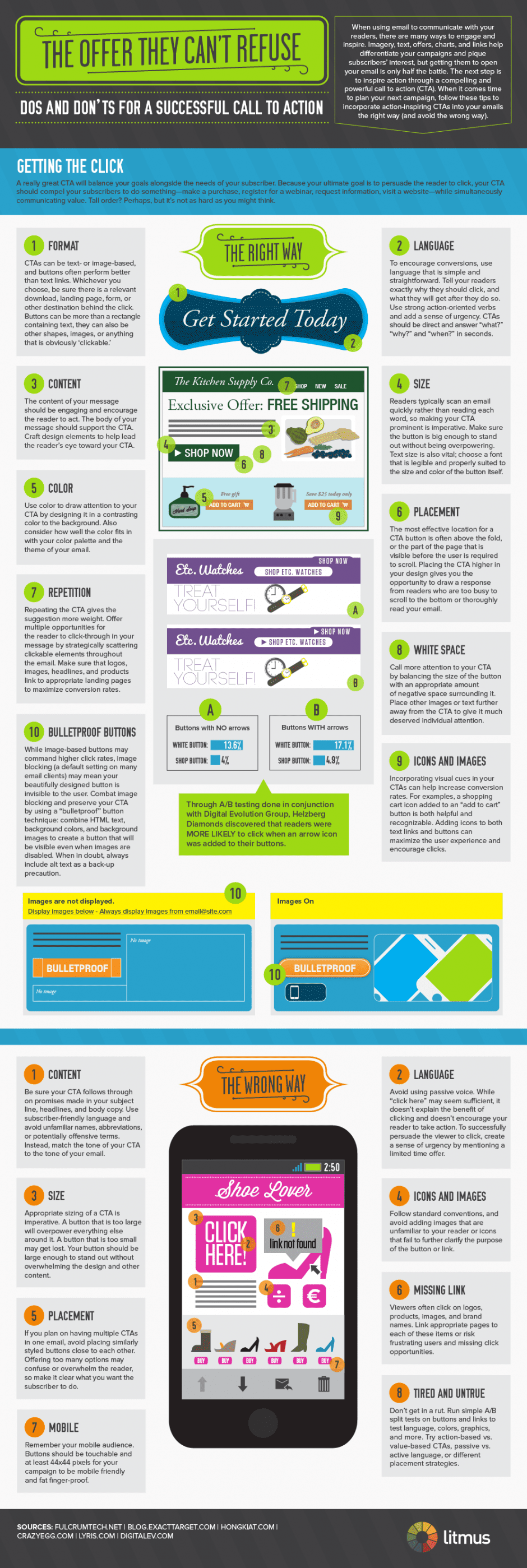
This of course applies to how consumers react to emails. Their decision to move onto the next stage is made within 2 or 3 seconds, so we need to make sure that we do everything we can to ensure that we inspire action.
Litmus have produced this great infographic to give us the inspiration to do this better
Tuesday, 13 March 2012
Personalised Search a Customer Experience Too Far?
A recent study in the US from Pew, came up with consumers fears about search engines using past search to filter future results. In particular:
65% say it is bad.because it may limit the information you get online and what search results you see ..and indeed this may result in less innovation going forward. ( See the origin of the word Serendipity for a slight distraction)
73% say it would NOT BE OKAY with a search engine keeping track of your searches and using that
information to personalize your future search results because you feel it is an invasion of privacy
A summary of the findings can be found on this pdf
65% say it is bad.because it may limit the information you get online and what search results you see ..and indeed this may result in less innovation going forward. ( See the origin of the word Serendipity for a slight distraction)
73% say it would NOT BE OKAY with a search engine keeping track of your searches and using that
information to personalize your future search results because you feel it is an invasion of privacy
A summary of the findings can be found on this pdf
Monday, 12 March 2012
Connect Europe 2012
I'm looking forward to this years Connect Conference from eCircle.

In particular the Integrate sessions from We Are Social on Heinz's use of Social Media and ''Integrating Content, Social and Email'' by Dave Chaffey from Smart Insights
But most of all, am looking forward to attending a conference without the need to prepare a presentation!
In particular the Integrate sessions from We Are Social on Heinz's use of Social Media and ''Integrating Content, Social and Email'' by Dave Chaffey from Smart Insights
But most of all, am looking forward to attending a conference without the need to prepare a presentation!
Monday, 16 January 2012
Monday, 5 December 2011
Wednesday, 30 November 2011
idio Content Marketing Breakfast
I recently had the pleasure of listening to Deborah Womack from Possible Worldwide at one of idio's Marketing Breakfasts and also the chance to present there .
This is a compilation idio have pulled together of some of the audience comments
This is a compilation idio have pulled together of some of the audience comments
A Bird in the Hand...
The Retail environment in the UK is a very competitive one, and no more so than the competition between the Supermarkets.
The main players are very keen to show that they are no more expensive than the competition. They do this is in different ways
ASDA for example have their Price Guarantee
' If the total cost of the comparable items in your shopping isn't 10% cheaper than the above competitors, we'll give you the difference'
What they ask you to do is to either go to the website or the actual ASDA Price Guarantee site no sooner than 6am the day after your shop and enter your receipt details.
Sainsbury's on the other hand, have their Brand Watch as part of their Live Well For Less standing.
They even have a nice little video to watch
And having shopped in one of their supermarkets the other day I received this at the till

Now setting aside which is the best deal for the consumer, I can't help think that Sainsbury's mechanic is better than ASDA's.
And this is purely because there and then, the consumer is given some re-assurance that they have got the best deal. They don't have to remember to hit the web the next day , with the receipt and do some work.( Perhaps that's the point, ASDA don't want them to do that)
The Sainsbury's version doesn't use a fancy widget, doesn't have a website. All it does is make use of the data they have collected about the competition and presented that to the consumer with respect to the shopping they have just done.
Simple everywhereCRM that tries to make the customer experience easier.
Thursday, 8 September 2011
Book Review : Online Marketing: A User’s Manual by Murray Newlands.
 The use of the words ‘user’s manual’ would seem to set the tone for this book, positioning it as some kind of reference piece for those of us involved with the practicalities of online marketing. Indeed, the quote from Chris Brogan on the front cover, “This book is actionable. It’s useful…Murray’s given you all you need to get started”, would back this up.
The book tackles what in the author’s opinion are the basics of online marketing: social media, digital branding, company websites, blogging, online PR and blogger outreach, email marketing, video marketing, affiliate marketing, SEO, digital advertising, with each chapter aiming to cover these various elements. It was inspired by the experience of the author being asked to go away and write the digital strategy for the organisation.
Murray and indeed Chris Brogan both suggest that the book can be read in one or used as a reference book. I decided to use the latter approach to start and dipped into two areas – one where I like to think I know a fair amount, email marketing, and the other where my knowledge is a little more sketchy, video marketing.
The chapter on email left me not really understanding if the book was meant to be a practical guide or a planning guide. There were good ideas on how to use email but they actually didn’t leave me feeling confident that I could give this to someone new to email and let them get on with it. Some of the real basics are missing, which reduced my confidence in the rest of the content.
The idea of having a ‘Tools and Resources’ section at the end of each chapter is great. But that then leads me onto another couple of issues. This book is obviously aimed at the US market so the reference points are American and actually limited in number. There are more useful reference points but they are kept within the main body of each chapter.
So, to video marketing. Again the chapter swung from needing a strategy for your video marketing to making sure your smartphone is charged ready for use to make a video. Reading this piece confirmed another view I had from the chapter about email – that the book lacked consistency in what it was trying to do. Even the flow of the basics seemed a little off, with Strategy third in a list of three after Video Hardware and Software.
Following on with a more traditional reading of the book from cover to cover, it is an easy read and does give a good introduction to all the areas of online marketing. I’m sure the reader would be more confident to approach each subject in more depth after taking in the whole. That is particularly true if you are a complete novice to the areas of online marketing. So its audience is probably restricted to individuals in very small organisations who are just venturing into the world of online. I would say that in larger organisations the level of knowledge already held in the marketing, PR and IT departments already surpasses what is in this book. The real trick missed here is how you actually pull all these online strands together to create a single online marketing strategy for your organisation.
Of course, the other issue with any book that covers the digital space is that it will be pretty much out of date as soon as it hits Amazon. A way to overcome this would have been to create an online version of the book that could be regularly updated as the world moves on.
Of course, the other issue with any book that covers the digital space is that it will be pretty much out of date as soon as it hits Amazon. A way to overcome this would have been to create an online version of the book that could be regularly updated as the world moves on.
This is a good start but probably not as useful as reading up on the topics online or investing in books dedicated to each section. There are good examples in some chapters but these are lacking in others. For me the topics are covered in too little detail and not in a consistent manner. It would seem to be Murray Newland’s blog set down on paper.
This review first appeared on the Marketing Society Blog
Tuesday, 30 August 2011
Silicon Valley It May Not Be...
But I for one applaud the selection of “Tech City’s” location in and around Shoreditch in East London. Known as East London Tech City (or Silicon Roundabout!) the scheme has already received backing from tech giants such as Google, Facebook and Intel.
I’m not sure that any location selected by the Government would have been welcomed with open arms and minds. Outside of London? Somewhere else in London? Croydon? They have all been touted as alternatives.
Some of the criticism aimed at the Government has been around the level of funding for the plan and indeed the participation (or lack) of organisations. But would it have been different if the location had been different? Probably not.
Okay so the timing of the initiative wasn’t perfect and the slowdown of the economy and general lack of confidence in the short term future has had an impact on this. This landscape has affected organisations putting their money where their mouth is. But in principle it was, and still is, a great idea.
And yes, the infrastructure in terms of transport isn’t perfect, but to be honest that doesn’t seem to have slowed the amazing development of the area around Old Street, Shoreditch, Hoxton etc into a vibrant and growing hub of creativity. And that is a big plus for the selection of the area, as well as the focus it should get (if managed correctly) as the Olympic year approaches.
Also, let’s not forget that many of the tech giants started off in even humbler backgrounds. The favourite start point for the darlings of Silicon Valley was the garden shed: Bill Hewlett and Dave Packard founded HP in a garage, as did the Google Guys and Steve Jobs for Apple’s first tentative steps; and Zuckerberg worked up the billion dollar future of Facebook in a university dorm.
Our office is just on the fringes of the area in Farringdon; but I work with or know of some great marketing agencies that are based in and around that area. Whether that’s the global scale of LBi, or smaller agencies such as Nearby Digital who work with the local communities. These guys really understand how technology and ideas go hand in hand.
Why do I see that as an advantage? Well I see technology being inspired and working at its best not when it sits in isolation from the rest of the world in an ivory tower (or indeed Silicon Valley), but when it works in tandem with some of the ideas generated in the cauldron of real life.
I believe in finding the mix between Tech, Creative and Insight to develop solutions for my clients’ business problems. In fact as I write this piece, sitting next to me, is my Head of Technology, Creative Directors and Head of Planning. I believe that establishing a tech centre of excellence in the heart of one of the creative centres of the world will encourage and foster just that opportunity for Technology to drive creativity and vice versa.
Of course the real question is whether or not the Government and the blue chips of the tech world (both new and old) follow through with their commitment above and beyond satisfying the next photo or sound bite opportunity? I hope so.
(This article was first published on Business Computing World and also at EHS4D )
(This article was first published on Business Computing World and also at EHS4D )
Friday, 26 August 2011
Friday, 19 August 2011
From Benign Dictatorship to True Democracy
That was the title of the very interesting after dinner speech at the Digital Leadership Dinner given by The Marketing Society on Tuesday evening.
Read a summary here and listen to a snapshot from speaker John Grant, author and co-founder of Ecoinomy here
My own view from a marketing perspective, is that even with many marketing models where we believe that we are moving towards true democracy we are still just painting Benign Dictatorship in a different colour. The recent example of Subway for example allowing customers to choose between a variety of new sandwiches for the new product launch is limited democracy. They were given a choice from a selection from Subway.
If we are looking to see how widespread democracy through crowd sourcing is, the take a look at over 1000 crowdsorcing and crowdfunding sites listed here .
Of course it depends on how we define democracy. If we believe that all brands should be run by consumers, then quite frankly I'm not sure there is a future in that. But if we believe that democratic barnds are ones that allow consumers a say in new product development including suggesting new products and services ( eg Starbucks) , or allow consumes to openly cast a vote on how good a product or service is ( eg Amazon ) then I'm a believer!
Read a summary here and listen to a snapshot from speaker John Grant, author and co-founder of Ecoinomy here
My own view from a marketing perspective, is that even with many marketing models where we believe that we are moving towards true democracy we are still just painting Benign Dictatorship in a different colour. The recent example of Subway for example allowing customers to choose between a variety of new sandwiches for the new product launch is limited democracy. They were given a choice from a selection from Subway.
If we are looking to see how widespread democracy through crowd sourcing is, the take a look at over 1000 crowdsorcing and crowdfunding sites listed here .
Of course it depends on how we define democracy. If we believe that all brands should be run by consumers, then quite frankly I'm not sure there is a future in that. But if we believe that democratic barnds are ones that allow consumers a say in new product development including suggesting new products and services ( eg Starbucks) , or allow consumes to openly cast a vote on how good a product or service is ( eg Amazon ) then I'm a believer!
Thursday, 18 August 2011
Monday, 8 August 2011
Phygital* - Will The Real QR Code Please Stand Up
A read an interesting piece from Adam Hutchinson the Lead UX Architect at EHS4D ( in fact there he is sat 10 feet away from me), on the value of QR codes.
Adam argued quite legitamately that 'for all their wizardry, they are currently being used in exactly the same way as URLs. That is, to link to a web address'
And indeed in the majority of cases that's right. eConsultancy did show, however, some really clever uses in a recent article, my favourite being the one below
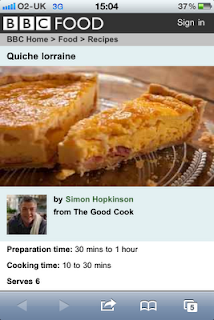
The jury is still out in particular as QR codes penetration is still quite low although recent experiments by broadcasters such as the BBC could very well increase awareness. The BBC One TV Program ''The Good Cook'' now has QR codes on screen to allow you to access recipes from the show.
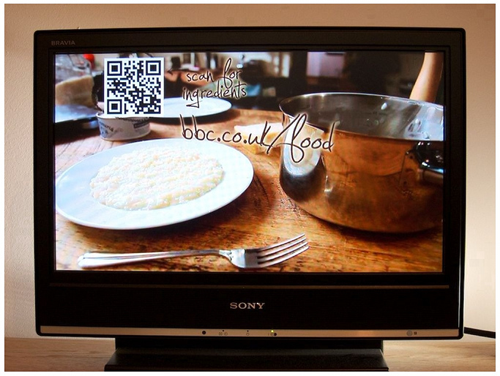
Danny Cohen, Controller, BBC One, says: “I want BBC One to lead the way with interactivity and technological innovation so that we can keep engaging audiences in new ways. I hope viewers will find this experiment with QR codes to be a simple but useful tool to help them re-create the recipes they see on screen.”
But of course as soon as one technology is in the consumers hand, another one takes another large step forward. Why stop at black and white boxes when actually the object itself ,once plastered with a QR code, becomes the tag itself. Check out the video
>
<
*Phyigital belongs to those clever people at Momentum
Adam argued quite legitamately that 'for all their wizardry, they are currently being used in exactly the same way as URLs. That is, to link to a web address'
And indeed in the majority of cases that's right. eConsultancy did show, however, some really clever uses in a recent article, my favourite being the one below
The jury is still out in particular as QR codes penetration is still quite low although recent experiments by broadcasters such as the BBC could very well increase awareness. The BBC One TV Program ''The Good Cook'' now has QR codes on screen to allow you to access recipes from the show.
Danny Cohen, Controller, BBC One, says: “I want BBC One to lead the way with interactivity and technological innovation so that we can keep engaging audiences in new ways. I hope viewers will find this experiment with QR codes to be a simple but useful tool to help them re-create the recipes they see on screen.”

But of course as soon as one technology is in the consumers hand, another one takes another large step forward. Why stop at black and white boxes when actually the object itself ,once plastered with a QR code, becomes the tag itself. Check out the video
>
<
*Phyigital belongs to those clever people at Momentum
Saturday, 6 August 2011
Reading the Signs
I came across the FIAT Street Evo app recently and was impressed by the numbers claimed at the end of the clip.
I think the use of technology, location , gamification make the campaign truly engaging.
Let's hope the conversations turned into conversions.
- 1 million signs spotted
- Great feedback
- The most viewed Fiat brochure in history!
I think the use of technology, location , gamification make the campaign truly engaging.
Let's hope the conversations turned into conversions.
Tuesday, 26 July 2011
Thursday, 21 July 2011
Personalisation for the Connected Consumer

Today’s world is increasingly being inhabited with Connected
Consumers. These consumers use multiple channels, touch-points and devices to
communicate with brands and with each other at warp speed, 24/7. The number of
marketing messages that consumers see is often quoted in the thousands.
Whatever the number, it’s a lot!
For brands, providing communications that quickly create
engagement with these consumers requires that message to resonate and so personalisation
is a key plank of any organisation’s eCRM Strategy.
I often have a quote in my presentations about lazy
marketers creating email newsletters. Now of course, having offended a large
proportion of the audience, I explain later on by actually talking about lazy
marketers creating one size fits all email newsletters. This is based on the
principle that if I put enough ‘stuff’ in front of you, something will take
your fancy. Today’s consumer doesn’t have the time or patience to trawl through
a mass of content to find something they need
Now of course we mustn’t mistake personalisation for
salutation. ‘Dear Gianfranco’ doesn’t really cut the mustard in terms of
personalisation these days. Even Cicero, the Roman philosopher, a few thousand
years ago talked about remembering and using someone’s name to have a
successful conversation with them. We need more than that if we are to persuade
our audience to takes us along with them on their journey
My old Greek friend Aristotle ( don’t worry, there are no
more philosophers in this piece) talks about Pathos, Ethos and Logos in the art of persuasion. In plain
English that roughly equates to Emotion, Credibility and Logic.
The emotion (Pathos) of a brand
can open up an email inbox for example but only positive and relevant
experiences will keep it open. And I believe that Credibility and Logic have the use of data at the heart.
In today’s data rich marketing world, logic in the form of personalisation
in eCRM can be based on 3 key information areas
Profile – What I’ve told a brand about myself in terms of
age, sex and interests
Behaviour – What a brand can infer are my likes, interests from
my interaction with them
Transactional – What do my purchases both on and offline
tell you about my current and future needs?
Used correctly, combining these starts to create relevance
and context to our messages in particular if we can overlay location as part of
all this as well an understanding of what device and or app they are reading
the message on. As a result, the messages and the brand gain credibility
But of course this new eCRM only works when the context and
relevance that you are engaging with me with has my Permission. But it also
stops working if you abuse my Privacy by ignoring the Permission I have given you.
That permission is about engaging me on particular topics, at certain times
using my preferred media. Nothing more.
Of course before you can
convince an audience, using Aristotle’s Ethos, they have to accept you as being
credible. And credibility also has Trust as a cornerstone.
As a consumer I want the
recommendations and relevancy that personalisation brings, but don’t want you
to abuse that trust.
And if you do, as a connected
consumer in today’s world using connected networks, your lack of ethos will be quickly
shared.
Friday, 15 July 2011
My Interview for Social Media Citizens
I had the pleasure of being interviewed by Giedrius Ivanauskas for Social Media Citizens earlier this month.
G: How would you define a social media “influencer”?
G: How would you define a social media “influencer”?
GC: I define influence as being able to change other people’s behaviour or thoughts. Influencers in Social Media need not have thousands upon thousands of followers or fans, but should be able to use their connections to change behaviour and create conversations with them. Real influence also means that these actions are spread onwards to stimulate conversations in the wider community.
And of course brands can be influenced themselves, not by single powerful influencers but by many influencers speaking as one in the ‘crowd’. Look at how companies like Starbucks use consumers to influence products and services via mystarbucksidea
G: How do you measure the influence?
GC: Funnily enough I look at the whole spread of a person’s footprint.
The rest of the interview can be read here
Subscribe to:
Comments (Atom)